Community
Freshwater
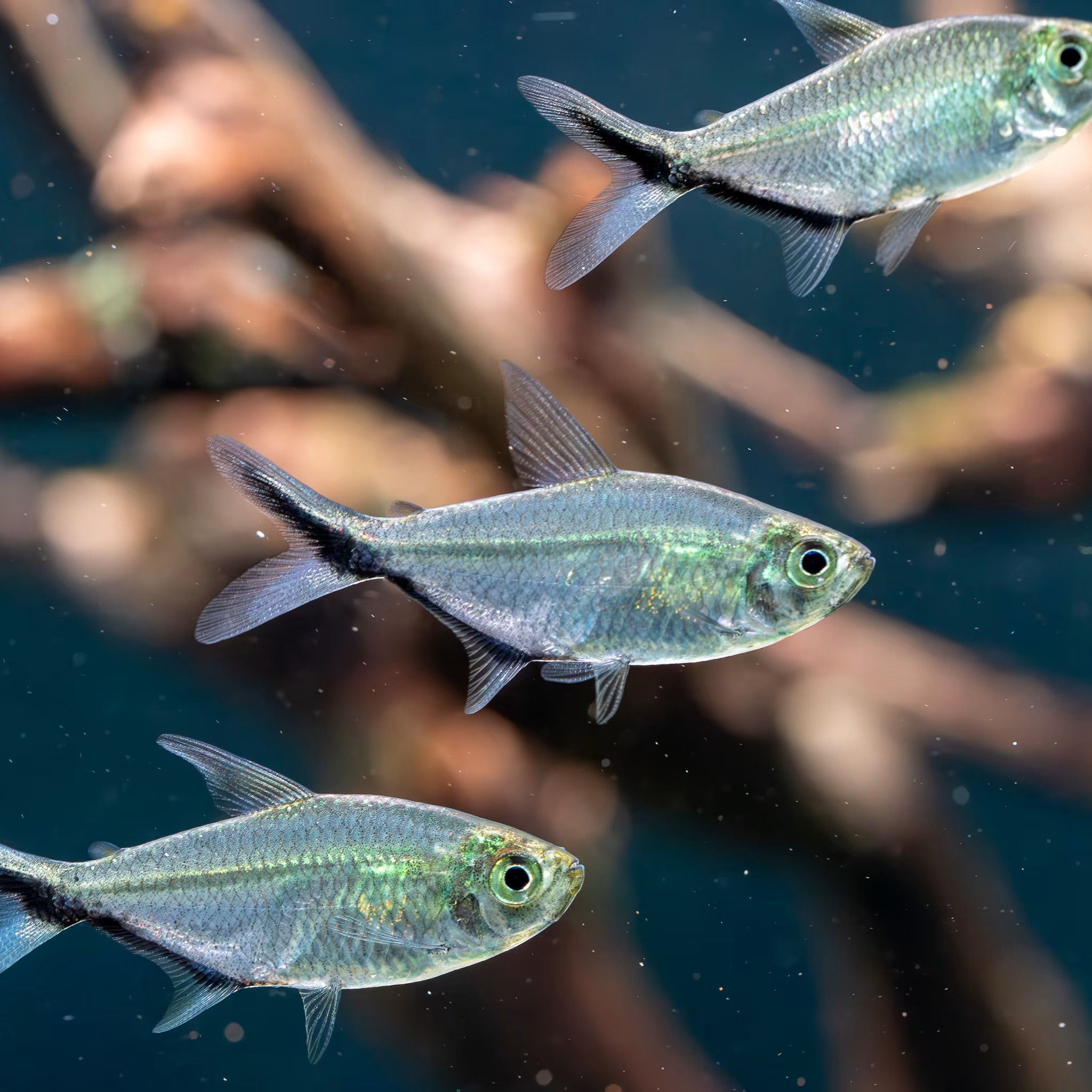


Moenkhausia costae - Tetra Fortuna
€3.00
Attributes
Fortuna Tetra - Moenkhausia costae
Scientific name: Moenkhausia costae
Common name: Fortuna Tetra
Family: Characidae
Order: Characiformes
Typical size in aquaria: 4 - 5 cm
Recommended pH range: 6.0 - 7.5
Recommended water hardness (dGH): 2 - 15°
Recommended temperature: 22 - 28 °C
Reproduction: Egg scatterer
Species origin: South America (São Francisco River basin, Brazil)
Lifespan: 3 - 5 years
Temperament: Peaceful and schooling
Usual position in the aquarium: Mid-water
Description
Moenkhausia costae, known in the hobby as the Fortuna Tetra, is a small schooling characin prized for the dark longitudinal stripe running along its silver body and for the yellowish tones of its fins. It is an active, hardy and easy-to-keep fish, ideal for planted freshwater community aquariums. Like all tetras, it feels safer and shows its best colours when kept in groups of at least 6 to 8 specimens.
Behaviour
A peaceful, schooling species that spends most of its time swimming in the middle of the aquarium. It may occasionally chase members of its own shoal to establish hierarchies, but rarely causes damage. It mixes well with other calm, similar-sized species such as other tetras, rasboras, corydoras and small loricariids. Avoid tank mates that are too large, aggressive or strongly territorial.
Feeding
Omnivorous and undemanding. It readily accepts quality flakes and granules as a staple diet, but feeding should be varied. Supplement with live or frozen foods such as brine shrimp, daphnia, bloodworms and microworms to improve colouration, health and overall condition.
Sexual dimorphism
Sexing is subtle. Mature females have a fuller body and a slightly rounder belly, especially when gravid. Males tend to be slimmer and to show more intense colours, particularly during courtship.
Breeding
Captive breeding is possible, though demanding. It is an egg scatterer: eggs are released among plants or over the substrate and receive no parental care. To breed it, set up a dedicated aquarium with slightly acidic, soft water, dim lighting and fine-leaved plants or Java moss. Condition the pair with live foods for one to two weeks, introduce them into the breeding tank and remove the adults after spawning to prevent them from eating the eggs. Fry hatch within a few days and should initially be fed infusoria and brine shrimp nauplii.
Habitat and biotope
Native to the streams and creeks of the São Francisco River basin in Brazil, where it inhabits areas of moderate current, clear to slightly dark water and densely vegetated banks. It prefers well-oxygenated water with some flow and cover provided by roots, driftwood and aquatic vegetation.
Aquarium setup
An aquarium from 60 litres upwards suits a shoal. Arrange plants of different heights, driftwood and rocks to create refuges and open swimming areas. A dark background and moderate lighting bring out the silver stripe and colours of the Fortuna Tetra. Keep a lid or barrier, as it is an active fish that may jump.
Water quality and maintenance
Carry out regular partial water changes (about 25% per week), maintain good filtration and avoid sudden swings in temperature and parameters. As it is sensitive to nitrogenous compounds, ensure the aquarium is fully cycled before introduction and avoid overfeeding.
Suggested for you

Podes saber mais ao visitar a nossa Política de Privacidade.
Puedes saber más visitando nuestra Política de Privacidad.
You can learn more by visiting our Privacy Policy.