
More info
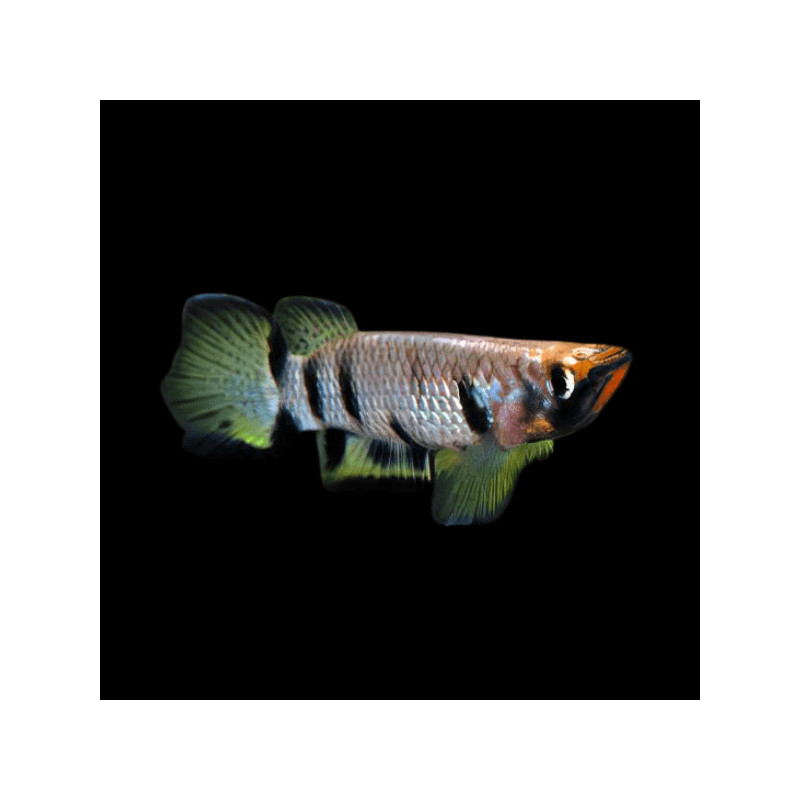
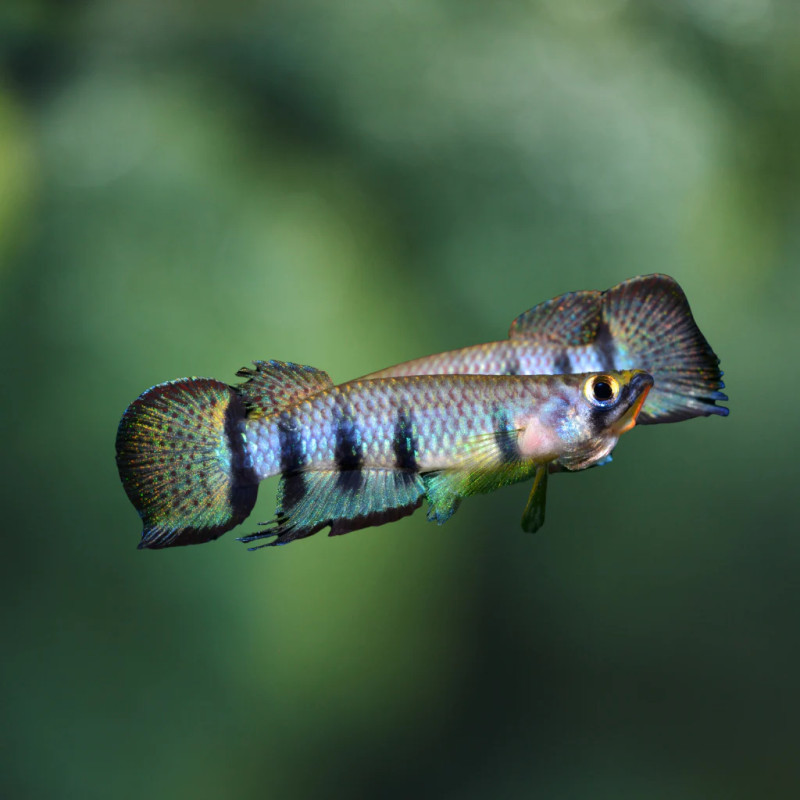
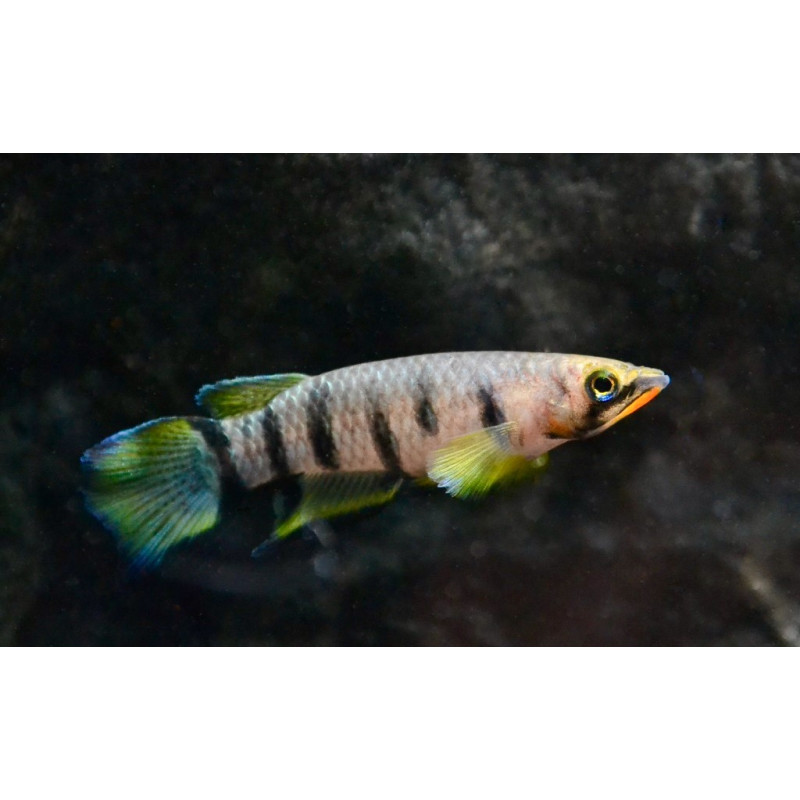
Common Name: Dageti Killifish
Scientific Name: Epiplatys dageti (Poll, 1953)
Order: Cyprinodontiformes — Family: Nothobranchiidae
Distribution: West Africa — Ivory Coast, Ghana, Liberia and Sierra Leone, in coastal basins and small watercourses.
Conservation Status (IUCN): LC — Least Concern
Lifespan: 2 to 3 years
Maximum Adult Size: 5–6 cm
pH: 6.0 – 7.5 — Hardness: 2 – 12 dGH
Temperature: 22°C – 26°C
Minimum Tank Size: 50 litres, with a lid (jumping species), dense vegetation and floating plants.
Behaviour & Compatibility:
A generally peaceful species, although males may be territorial with each other. Primarily occupies the upper water column. Suitable for community aquariums with small, calm fish. Best kept in small groups or harems.
Diet:
Carnivore. Feeds on surface insects, larvae and small invertebrates. In captivity accepts live and frozen foods (mosquito larvae, brine shrimp, daphnia), and can adapt to high-quality dry foods.
Reproduction:
Oviparous. A non-annual killifish that deposits eggs among fine-leaved plants or floating roots. Breeding in aquaria is relatively easy. Eggs hatch after 10–14 days. No parental care is provided.
Sexual Dimorphism:
Pronounced. Males are more colourful with more developed fins, while females are duller.
Habitat & Biotope:
Slow-moving streams, swamps and shallow waters with dense vegetation and shaded conditions.
Etymology:
Epiplatys derives from Greek epi (upon) and platys (flat), referring to its surface-dwelling behaviour. The species name dageti honours ichthyologist Jacques Daget.

