
More info
Common Name: Regan’s Julido from Zambia, Zambian Julidochromis, Tanganyika Rock Cichlid
Scientific Name: Julidochromis regani “Zambia”
Order: Cichliformes — Family: Cichlidae (African Cichlids)
Distribution: Lake Tanganyika, East Africa — Found in southern coastal regions near Zambia. Endemic to rocky shore habitats.
Lifespan: 8 to 10 years
Maximum Size (Adult): 12 to 15 cm
pH: 7.8 to 9.0 — Hardness: 10 to 20 dGH
Temperature: 24°C to 27°C
Minimum Aquarium Size: 200 liters
Reef Safe (Compatibility): Not applicable — Freshwater species (Lake Tanganyika).
Behavior & Compatibility:
Territorial but relatively peaceful when not breeding. Forms stable monogamous pairs that defend caves and rock crevices. Best kept in Tanganyika-specific aquariums with other peaceful, similarly sized species. Avoid mixing with other Julidochromis species to prevent hybridization.
Diet:
Carnivorous. In nature, it feeds on small invertebrates and insect larvae found among rocks. In captivity, it accepts high-quality dry foods, African cichlid pellets, and frozen foods such as brine shrimp, mysis, and finely chopped krill. Avoid protein-rich terrestrial animal feeds.
Reproduction:
Oviparous with biparental care. Eggs are laid in rock crevices or caves, where both parents protect them and later care for the fry. Eggs hatch within 3–5 days, and the fry remain under parental supervision for several weeks.
Sexual Dimorphism:
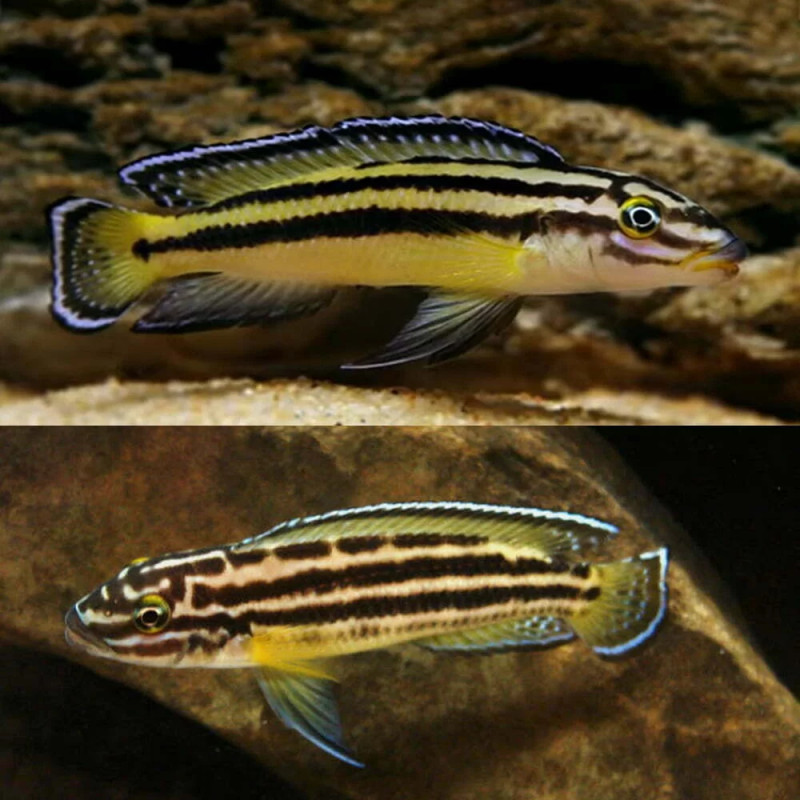
Subtle — females are usually slightly larger and more robust than males. Both sexes share a similar coloration, featuring dark horizontal stripes over a beige or yellowish background.
Natural Habitat & Biotope:
A rock-dwelling cichlid from Lake Tanganyika, inhabiting coastal zones with abundant caves and crevices at depths of 3–15 meters. Prefers clear, alkaline, and oxygen-rich waters.
Etymology:
The genus name Julidochromis comes from Latin Julis (a type of fish) and Greek chroma (color). The species name regani honors the British ichthyologist Charles Tate Regan.
Foto ilustrativa. | Illustrative photo.


